
International Signs & Symbols for Hearing Loss
Just as knowing what road signs mean is important to driving well, Being able to recognize these important hearing loss signs to be able to successfully navigate the world.
International Symbol of Access for Hearing Loss


This sign, which is also known as the International Symbol for Deafness, indicates that there are products or services accessible for people with hearing loss. The symbol is primarily used to designate locations with assistive listening devices, but it can also be used to designate locations with other types of hearing access.
Hearing Impaired Compatible Phone


According to this sign, the public phone is reserved for people who have hearing problems. Compared to typical public phones, these phones have a 12–18 dB higher volume.
Hearing Protection


This sign, which indicates that hearing protection is necessary, is frequently displayed near building sites. Your ears will be shielded from loud sounds that could harm them by wearing hearing protection, which is typically in the form of headphones.
Assistive listening devices—alternative symbol
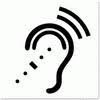

On occasion, this symbol is utilized in place of the International Symbol. It can be used to show that various devices, such as assistive listening devices, are available to help people with hearing loss. Many technologies exist; some of them can even be paired with hearing aids. These facilitate hearing in a specific setting or situation for a person who has hearing loss.
Sign language interpretation provided

Anywhere there are sign language interpreters available, you will see this sign up.
Even though some attractions regularly provide this service, it’s a good idea to check online or give them a call well in advance of your visit to ensure that it will be offered. Request a seat in the sign language audience area if you’re attending a live event, like a lecture or the theater.
Open Captioning (OC)


Open captioning is text that is always visible on the screen, whereas closed captioning (CC) is an option that can be turned on and off. Open captioning can be helpful for people with all kinds of hearing abilities because it cannot be turned off, especially in noisy places like restaurants or airport terminals. Open captioning is intended especially for people with hearing loss or environments that are generally regarded as excessively noisy or loud.
Telephone typewriter (TTY):


The 1960s saw the invention of this unique tool by deaf scientist Robert Weitbrecht, which facilitates telephone use for the hard of hearing.Users can type and receive messages over the phone line thanks to the phone handset’s design.
Because they won’t be trying to understand the conversation over other background noise or sounds, this facilitates communication for people who have hearing loss.
Volume control telephone
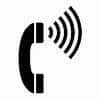

If you need amplification, there is a volume adjustment control on public phones that bear this sign. Additionally, some models come with a headset that can be used to block out background noise, traffic, or other people’s phone conversations.
CONCLUSION
If you familiarize yourself with these signs, you will be able to more easily navigate the hearing world. If you have any questions, contact our audiologist. They will be happy to give you a list of which signs to look out for.
Latest Posts
-
 Hearing Test: What to Expect and Why It MattersSeptember 29, 2026
 -
 Brain Health and Hearing Loss: Understanding the ConnectionSeptember 29, 2026
 -
 Cognitive Health and the Importance of Good HearingSeptember 28, 2026
 -
 International Day of Sign Languages: Celebrating Communication and InclusionSeptember 28, 2026
 -
Deaf Awareness MonthSeptember 15, 2026


